The Convenience Penalty: How Paying Bills Online Is Quietly Costing American Households Hundreds Per Year

Photo: Adriaen van Ostade, CC0, via Wikimedia Commons
There is a quiet irony embedded in the American billing system. The more technologically engaged you are—the more you embrace the digital-first lifestyle that financial institutions and service providers have spent years encouraging—the more you may be paying for the privilege of doing so. Online bill payment, long promoted as a faster, greener, and more efficient alternative to paper checks, frequently carries fees that paper payments do not. The result is a structural penalty on convenience that disproportionately affects households that have fully committed to digital financial management.
A Fee Structure Built for Another Era
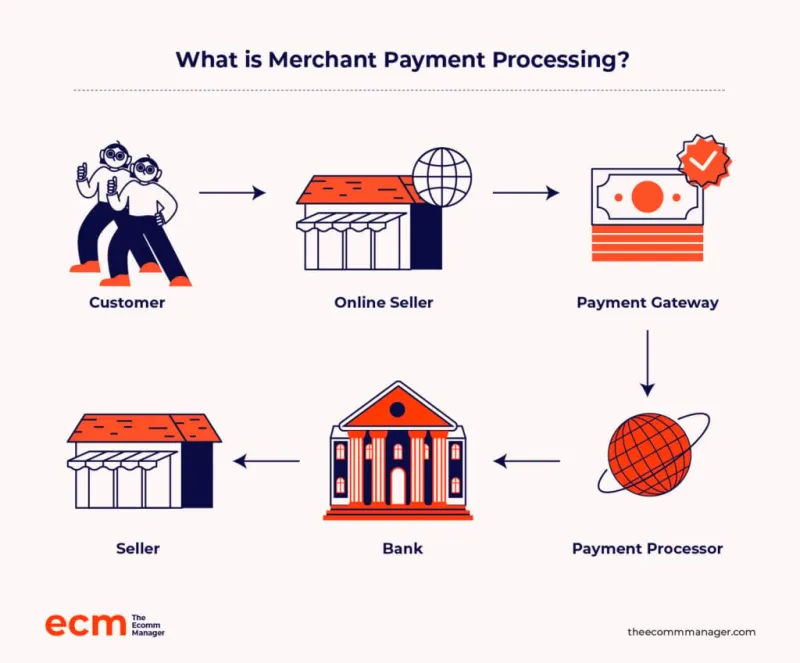
The origins of online payment surcharges are, in some cases, logistically defensible. Processing a credit or debit card transaction costs money. Payment processors charge interchange fees, and third-party billing platforms collect their own margins. When a utility company routes your payment through a vendor like Invoice Cloud, Paymentus, or a similar platform, that vendor charges for the service. The utility, rather than absorbing that cost, passes it directly to the customer.
What makes this arrangement particularly striking is the comparison point: mailing a paper check typically costs the billing company nothing beyond basic processing labor, and that cost is already baked into operating budgets. The customer who mails a check pays only postage—currently $0.73 for a first-class stamp. The customer who pays the same bill online through a credit card may pay anywhere from $1.50 to $4.95 in flat fees, or a percentage surcharge ranging from 1.5% to 3.5% of the payment amount.
For a single bill, this seems minor. Across an entire household's annual obligations, the math becomes considerably less comfortable.
Calculating the Real Annual Cost
Consider a representative American household that pays the following bills digitally each month: an electric utility, a gas or water bill, a municipal property tax installment, a vehicle registration renewal, a health insurance premium, and a local government fee of some kind. This is not an exhaustive list—it is a conservative one.
If each of those payments carries a convenience fee averaging $2.75, that household absorbs roughly $16.50 in monthly surcharges, or approximately $198 per year, simply for choosing to pay online rather than by mail. Households that also pay rent through digital platforms, use credit cards to settle medical bills, or process government fines and court fees online will push that figure considerably higher.
In states where property tax payments are processed through third-party portals, the percentage-based fees can be especially punishing. A homeowner paying $6,000 in annual property taxes through an online portal charging a 2.5% convenience fee absorbs $150 in fees on that single obligation alone. Paying by check or e-check—where ACH processing is often available at no cost—would eliminate that charge entirely.
Which Industries Are the Worst Offenders?
Not all sectors apply these fees equally. The landscape varies significantly by industry and, in many cases, by state regulation.
Utilities are among the most consistent fee chargers. Electric, gas, and water companies frequently partner with third-party payment vendors and pass those costs to customers who pay by card. ACH bank transfers are often free or low-cost, but card payments routinely carry fees of $1.50 to $4.95 per transaction. Some utilities offer online payment discounts for autopay enrollment, but only through bank account debit—not through the card networks most consumers prefer.
Government agencies represent one of the more surprising offenders. The IRS, state revenue departments, county tax collectors, and municipal courts all commonly impose convenience fees on digital card payments. The IRS itself charges between 1.82% and 1.98% for credit card tax payments through its authorized processors. Paying a $5,000 tax bill by credit card online could cost an additional $90 to $99 in processing fees alone.
Healthcare billing is increasingly fee-laden as well. Many hospital systems and medical billing platforms have introduced payment processing fees as they migrate to consumer-facing digital portals. Patients who receive care and then try to settle their accounts online—often at 2:00 a.m. on a smartphone, because that is when they have time—may encounter surcharges that were never disclosed during the billing conversation.
Insurance premiums paid by credit card frequently carry fees of 2% to 3%, particularly for auto and homeowners policies. Insurers argue that credit card processing costs justify the surcharge, and they are not wrong—but they are also not absorbing those costs in the way that customers might reasonably expect from large, profitable enterprises.
The Regressive Nature of Convenience Fees
There is a demographic dimension to this issue that deserves direct acknowledgment. Convenience fees function as a regressive charge—one that affects lower-income households more acutely than higher-income ones, even when the nominal dollar amounts are identical.
For a household earning $35,000 per year, $200 in annual convenience fees represents a more meaningful share of disposable income than it does for a household earning $150,000. At the same time, lower-income households are less likely to have the banking infrastructure—such as a checking account with a robust bill-pay feature—that would allow them to avoid those fees through ACH transfers.
Digital payment platforms have frequently been positioned as tools of financial inclusion, enabling the unbanked and underbanked to participate more fully in the formal economy. The irony is that many of those same platforms embed fee structures that extract additional cost from the users least positioned to absorb them.
What Smarter Payment Choices Look Like
The most effective strategy for avoiding convenience fees is understanding which payment methods trigger them—and which do not.
ACH bank transfers (sometimes labeled as e-check or direct debit) are almost universally free or very low cost. When a biller offers both card and bank account payment options, the bank account route almost always avoids the surcharge. Setting up ACH autopay for recurring utilities and insurance premiums can eliminate the majority of convenience fees a household would otherwise accumulate.
Checking account bill pay through your bank's own platform—where the bank issues a paper check or electronic transfer on your behalf—is typically free and bypasses third-party processors entirely. Most major retail banks and credit unions offer this feature at no charge.
Reward card math requires honest assessment. Paying a 2.5% convenience fee to earn 1.5% cashback on a credit card is a net loss of 1%. Unless your card earns rewards at a rate that exceeds the convenience fee, using a debit card or bank transfer is the financially superior choice.
Timing and installment options can also reduce exposure. Some government agencies waive online fees for early payments or for accounts enrolled in payment plans. It is worth calling the billing department directly to ask.
The Broader Policy Question
Several states have begun scrutinizing convenience fee practices, particularly in the context of government payments. The argument is straightforward: if a public agency mandates a payment obligation, it should not impose an additional charge for the most accessible payment method. A handful of municipalities have moved to absorb processing costs rather than pass them to residents, treating digital payment infrastructure as a public service cost rather than a revenue opportunity.
Wider adoption of that approach remains limited, but the conversation is growing. Consumer advocacy organizations have highlighted convenience fees as a form of financial friction that discourages digital adoption while simultaneously punishing those who have already adopted it.
For now, the burden falls on individual households to navigate a billing landscape that has not fully resolved the tension between encouraging digital payment and fairly distributing its costs. The first step is simply knowing the fees exist—and understanding that in many cases, a different payment method, chosen deliberately, can make them disappear entirely.