The Cash Toll: How Branch Closures and ATM Fees Are Turning Paper Money Into a Premium Service
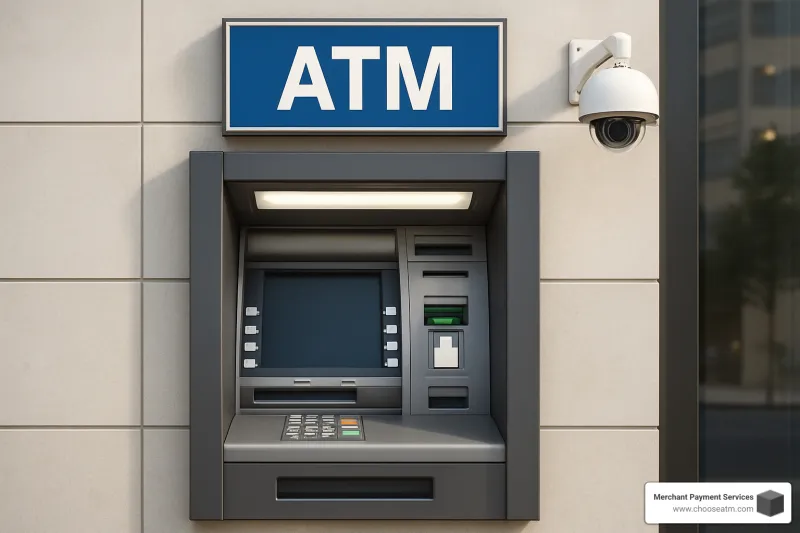
Photo: ATM surcharge screen with person withdrawing cash near closed bank branch, via images.bannerbear.com
Cash has become the payment method Americans love to declare obsolete and still need. A tipped worker needs singles. A parent pays a school fee. A person without a smartphone buys groceries. A traveler whose card is frozen needs a tank of gas. The cash door—the physical and financial route to paper money—is narrowing. Branches close, out-of-network ATM fees stack up, retailers cap cash-back, and some stores refuse cash. Each change can be defended as efficiency. Together they turn access to legal tender into a service with a price and a location requirement. That is not just a convenience issue. It is payment infrastructure.
Cash Is Still Infrastructure
Digital payments dominate the headlines, but cash remains a backup rail for households with irregular income, limited banking access, or a preference for privacy. It is also a practical tool for small transactions: a bottle of water, a tip, a school fundraiser, a farmers market. When a payment network goes down, cash keeps working. When a bank account is frozen, cash buys time. When a retailer’s card terminal fails, cash keeps the line moving.
Treating cash as infrastructure changes the question. The issue is not whether most people prefer cards or phones. The issue is whether people can reach cash when they need it, at a reasonable cost, without traveling unreasonable distances. In 2026, that access is uneven. A suburban customer with a national bank account may have several fee-free ATMs within a short drive. A rural customer may have one branch, one ATM, and a grocery store that limits cash-back. A low-income household may pay a surcharge to withdraw $20 because the alternative is no cash at all.
The Fee Stack at the Machine
An ATM withdrawal can carry more than one fee. The ATM operator may charge a surcharge for using the machine. The customer’s own bank may charge an out-of-network fee. A foreign transaction fee may apply if the card is used abroad. Some banks reimburse a limited number of out-of-network fees per month; others reimburse none. The result is a fee stack that can turn a $20 withdrawal into a $23 or $25 transaction.
The fee stack is not always visible before the withdrawal. A machine may disclose a surcharge on screen, but the customer’s own bank fee may appear only on the statement. That separation makes comparison difficult. A $3 surcharge feels manageable. A $3 surcharge plus a $2.50 out-of-network fee plus a separate balance inquiry fee changes the math. Consumers who withdraw cash frequently can lose track of how much they are paying for access.
Banks defend the fees as a way to cover the cost of maintaining a network. That is a legitimate operational point. ATMs require cash replenishment, security, maintenance, and real estate. But the fee structure also shapes behavior. It encourages customers to stay inside a preferred network, which is good for the bank and not always convenient for the customer. When branches close, the preferred network shrinks. The fee-free options shrink with it.
Branch Closures and the Geography of Access
Branch closures are often announced as a response to declining foot traffic and the shift to digital banking. The logic is straightforward: fewer people visit branches, so fewer branches are needed. The effect is less straightforward. A closure can leave a neighborhood without a nearby deposit-taking location. It can push cash withdrawals to ATMs that charge fees. It can make it harder for small businesses to deposit cash and coins. It can add travel time and cost for people who cannot or will not bank entirely online.
The geography matters. Urban neighborhoods with multiple banks may absorb a closure without much disruption. Rural areas may lose the only branch within thirty miles. Older customers, people with disabilities, and households without reliable internet may depend on the branch more than the average customer. The closure may be efficient for the bank’s cost structure and costly for the community’s access.
Cash-Back Limits and Cashless Checkouts
Cash-back at the grocery store is one of the cheapest ways to get cash without an ATM. A debit card purchase with cash-back can turn a $40 grocery run into a $60 withdrawal with no surcharge. But cash-back is not guaranteed. Retailers set limits based on their cash levels, the time of day, and the payment network. Some stores cap cash-back at $20 or $40. Some do not offer it at all. Some require a PIN and a debit card, which excludes credit card users.
Cashless checkouts add another layer. A growing number of restaurants, cafes, and stadiums accept only cards or mobile payments. Some are cashless by design; others are cashless because the card terminal is the only system they have. Federal law does not require private businesses to accept cash, though some states and cities have considered or adopted rules requiring cash acceptance. The result is a patchwork. A customer can pay with a card in one store and be turned away in the next.
For people who rely on cash, a cashless checkout is not a minor inconvenience. It can mean leaving without the purchase. For people who prefer cash for privacy or budgeting, it can feel like a restriction on legal tender. For retailers, cashless operations can reduce theft and handling costs, but they can also exclude customers and raise questions about fairness.
Who Pays for the Cash Door
The cost of cash access is not borne equally. A customer with a premium account that reimburses ATM fees may pay nothing. A customer with a basic account may pay every time. A retailer may absorb the cost of cash handling or pass it on through prices. A bank may close a branch and save money while customers travel farther. The cash door is open, but not always free.
The deeper issue is that cash access is treated as a private service rather than public infrastructure. Banks compete on convenience, but they also decide where convenience exists. ATMs are placed where they can be profitable or strategic. Branches are closed where they are underused. The market can deliver cash access efficiently in some places and poorly in others. The people who pay the most are often the ones with the fewest alternatives.
Practical Ways to Avoid the Surcharge Trap
Start with your own bank’s ATM network. Use the bank’s mobile app or website to find in-network machines. If you frequently travel or work outside the network, ask whether your account offers fee reimbursements. Some online banks reimburse a set amount per month; some credit unions share ATM networks. A quick comparison can save more than a rewards category.
Use cash-back at a grocery store or pharmacy when the limit is reasonable. Pay with a debit card, choose cash-back at the register, and avoid the ATM surcharge entirely. Check the store’s policy before you rely on it. Keep a small cash buffer at home for emergencies, but do not hold more than you can afford to lose. If you need a large amount of cash, plan the withdrawal and compare the fees at nearby machines.
Consider a secondary account at a credit union or community bank with a broad ATM network. Some institutions offer fee-free withdrawals at partner machines. If you are paid in cash or run a small business, ask your bank about deposit options before a branch closes. If a cashless checkout is a problem, ask the business whether it accepts cash and let them know why it matters. The cash door is not closed everywhere. But it is becoming more expensive to find—and that is a payment issue worth watching.