What International Transactions Are Really Costing You—And How to Stop Overpaying

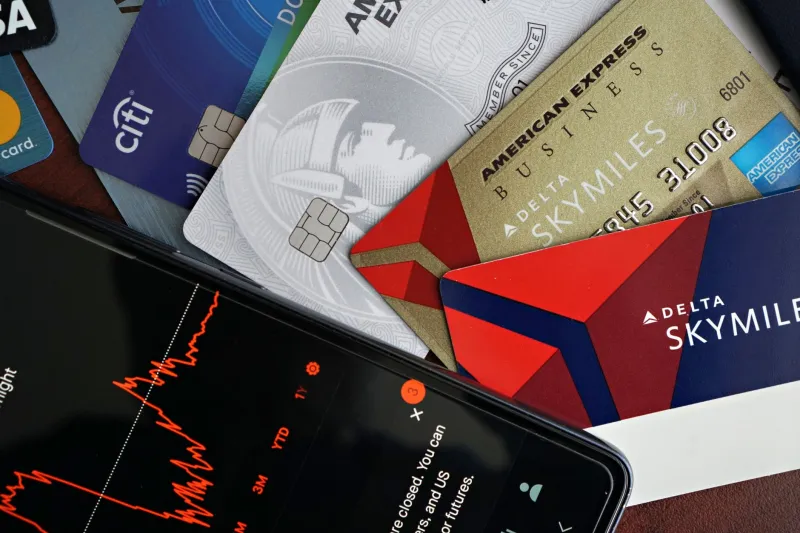
Photo: Pierre André Leclercq, CC BY-SA 4.0, via Wikimedia Commons
You've saved for months, booked the flights, and planned every detail of your trip abroad. What you may not have planned for is the quiet tax that payment networks, banks, and currency markets collect every time your card or digital wallet touches a foreign transaction. For many American travelers, these charges arrive not as a single line item but as a scattered series of small deductions that collectively inflate trip costs by hundreds of dollars.
Understanding how international payment fees work—and where they come from—is the first step toward making smarter decisions before you ever leave the country.
The Anatomy of a Cross-Border Transaction
When you swipe a US-issued card at a shop in Rome or tap your phone to pay at a market in Tokyo, several parties are involved in processing that payment. The merchant's bank communicates with your card's payment network—Visa, Mastercard, or American Express—which in turn routes the transaction back to your issuing bank. At each stage, fees can be applied.
The most common charge is the foreign transaction fee, typically ranging from 1% to 3% of the purchase amount. This fee is set by your card issuer, not the payment network, and it applies to virtually every cross-border purchase unless your card explicitly waives it.
Separate from that is the currency conversion spread—the difference between the mid-market exchange rate (the rate you see on Google or XE.com) and the rate your bank or network actually applies. Most institutions build a markup into this rate of 1% to 2.5%, meaning you're already losing money before any stated fees are added.
Then there's dynamic currency conversion (DCC), an optional service that foreign merchants frequently push at the point of sale. When a merchant offers to charge you in US dollars instead of the local currency, they're applying their own exchange rate—one that almost always carries a steep markup of 3% to 7%. The offer sounds convenient, but it almost invariably costs more. The correct move is always to pay in the local currency and let your card network handle the conversion.
How Major Payment Methods Compare
Traditional Credit Cards
The majority of standard US credit cards charge a foreign transaction fee of around 3%. For a $3,000 international trip, that's $90 in fees before you account for currency conversion markups. Cards from issuers like Bank of America, Chase (on many standard products), and Citi commonly carry this fee.
However, many travel-focused credit cards—including the Chase Sapphire Preferred, Capital One Venture, and most American Express travel cards—have eliminated foreign transaction fees entirely. If you travel internationally even once a year, switching to or adding one of these cards to your wallet is one of the most straightforward cost-reduction moves available.
Debit Cards
Debit cards are often perceived as the simpler, safer option abroad, but they can carry even higher effective costs. In addition to foreign transaction fees (which many bank-issued debit cards charge), ATM withdrawals overseas may trigger both a fee from your US bank and a fee from the foreign ATM operator. These can range from $3 to $10 per withdrawal, compounding quickly if you're accessing cash frequently.
Some banks—notably Charles Schwab and Fidelity—offer debit cards that rebate ATM fees globally and charge no foreign transaction fees, making them standout options for international travelers who prefer cash access.
Digital Wallets: PayPal, Venmo, and Apple Pay
PayPal applies a currency conversion fee of approximately 3% to 4% above the base exchange rate when you send or receive money in a foreign currency. For peer-to-peer transfers abroad, this can add up quickly. Apple Pay and Google Pay, when linked to fee-waiving credit cards, can be cost-effective at merchants that accept them—but the underlying card's fee structure still applies.
It's worth noting that not all digital wallets are accepted uniformly outside the US. Merchant acceptance of contactless mobile payments varies significantly by country, which can limit your options in certain regions.
Specialized Travel Payment Apps
A newer category of fintech tools has emerged specifically to address cross-border payment costs. Apps like Wise (formerly TransferWise) and Revolut offer exchange rates that closely track the mid-market rate with transparent, low fees—often well below 1% for currency conversion. Wise, in particular, has become a trusted option for Americans sending money internationally or needing a multi-currency account while traveling.
Revolut's paid tiers offer fee-free currency exchange up to certain monthly limits, which can be valuable for extended trips. These platforms aren't without limitations—they function differently from traditional bank accounts and may not offer the same consumer protections—but for currency conversion specifically, they represent a meaningful cost advantage.
Practical Strategies Before You Travel
Audit your current cards. Before booking any international trip, review the terms of every card in your wallet. Look specifically for the foreign transaction fee disclosure in the card's Schumer Box or fee schedule. If all your cards carry this fee, consider applying for a no-foreign-transaction-fee card at least 30 days before departure to allow time for approval and delivery.
Avoid airport and hotel currency exchange. These services routinely offer exchange rates that are 8% to 15% worse than the mid-market rate. They are among the most expensive ways to convert currency, full stop.
Decline dynamic currency conversion every time. When a payment terminal or ATM asks whether you'd like to be charged in US dollars, always decline. Choose the local currency. This single habit can save you 3% to 7% on every affected transaction.
Use ATMs strategically. If you need local cash, withdraw larger amounts less frequently to minimize per-transaction ATM fees. Use ATMs affiliated with major banks rather than standalone machines in tourist areas, which tend to charge higher fees and apply worse exchange rates.
Consider a dedicated travel money solution. Loading a Wise or Revolut account before departure allows you to convert currency at near-market rates in advance, giving you both cost predictability and spending flexibility.
The Compounding Effect You're Not Seeing
The reason international payment fees often go unnoticed is that they don't appear as a single charge. A 3% foreign transaction fee, a 2% currency conversion markup, and a $5 ATM withdrawal fee look small in isolation. But across two weeks of active spending, they can collectively represent a significant unplanned expense—one that doesn't appear on any itemized receipt.
For Americans who travel internationally with any regularity, or who send money abroad to family or business partners, the cumulative cost of ignoring these fee structures is substantial. The payment infrastructure that moves your money across borders was not designed with your interests as its first priority. Understanding its mechanics, and choosing instruments accordingly, is how you take back control.
At ITOnlinePay, our editorial focus is helping you make payment decisions with full information—not after the fact. The right card, app, or account for international use is rarely the one you already have by default. It's the one you chose deliberately.