When the Payment Network Says No: How Processors Are Quietly Reshaping Which Businesses Survive Online
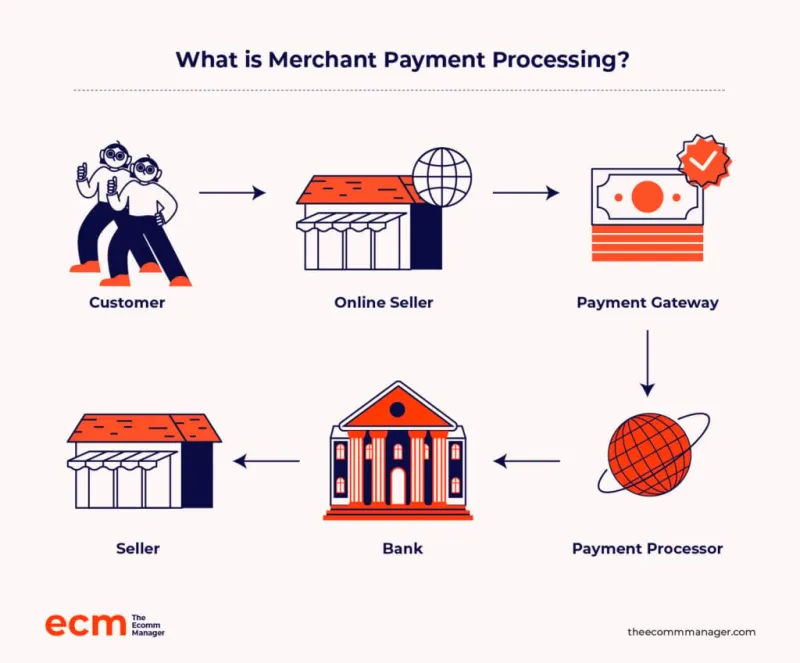
Photo: payment processor merchant account small business digital transaction, via theretailexec.com
Most Americans assume that if a business is legal, a payment processor will handle its transactions without issue. That assumption, it turns out, is frequently wrong.
Behind the seamless interface of a checkout page lies a complex, often opaque layer of financial infrastructure—one where payment processors, acquiring banks, and fintech platforms wield considerable authority over which merchants can accept money and which cannot. The criteria governing these decisions are rarely published in plain language, and the consequences for both merchants and consumers can be significant.
The Invisible Gatekeeper at the Checkout
When a consumer clicks "Pay Now," the transaction travels through a chain of intermediaries: the payment processor, the card network (Visa, Mastercard, American Express, or Discover), and the acquiring bank that holds the merchant's account. Each party in this chain carries its own risk policies, and any one of them can effectively veto a transaction—or an entire merchant relationship.
Payment processors typically segment merchants into risk categories. Businesses in industries considered "high-risk"—a designation that can encompass firearms retailers, adult content platforms, supplement sellers, travel agencies, and even certain political or advocacy organizations—face heightened scrutiny, higher processing fees, or outright denial of service.
What makes this particularly consequential is that the definition of "high-risk" is not standardized. One processor may readily serve a legal firearms accessories retailer while another refuses outright. A crowdfunding platform for independent musicians may find its payment gateway frozen after a sudden policy revision. In each case, the merchant receives little formal recourse, and the consumer is left unable to complete a purchase they intended to make.
Real Scenarios, Real Disruptions
Consider the small business owner who sells handmade herbal tinctures through an online storefront. Despite operating fully within federal and state regulations, she discovers one morning that her payment processor has placed a hold on her account pending a review—a review with no stated timeline. Orders go unfulfilled. Customers receive no explanation. Revenue stops.
Or consider the independent documentary filmmaker who uses a subscription platform to distribute his work. When that platform's payment processor revises its content guidelines, his channel is flagged. His subscribers' recurring payments fail. The platform does not restore service for three weeks.
These are not isolated incidents. According to advocacy groups representing small businesses and independent creators, merchant account terminations and payment freezes have become more frequent as processors face increasing pressure—from card networks, regulators, and institutional investors—to minimize financial and reputational exposure.
The Criteria Nobody Publishes
Payment processors are not legally required to disclose the precise criteria they use to approve or decline merchant applications. Most terms of service include broad language reserving the right to terminate accounts "at our discretion" or for activity deemed inconsistent with the processor's "risk tolerance."
This opacity creates a system in which merchants—and by extension, their customers—operate under rules that can shift without notice. A business that processed transactions without incident for two years may find its account frozen following a processor's internal policy update, a spike in chargebacks from an unrelated industry, or a change in the card network's prohibited categories list.
Card networks themselves issue periodic updates to their guidelines, and processors are contractually obligated to enforce those changes. When Visa or Mastercard adds a new category to its restricted list, processors downstream must act swiftly—sometimes sweeping up legitimate businesses in the process.
The Consumer's Diminished Choice
From a consumer standpoint, the downstream effect of merchant gatekeeping is a narrowing of purchasing options that most people never consciously register. When a small online retailer loses its payment processor, it rarely disappears from the internet overnight. Instead, it may shift to a less convenient payment method—bank transfers, cryptocurrency, or mailed checks—creating friction that drives consumers toward larger, processor-approved competitors.
This dynamic disproportionately benefits established retailers with the legal resources and transaction volumes to negotiate preferred processing agreements. It disadvantages independent merchants, niche retailers, and creators whose revenue streams are more vulnerable to sudden account disruptions.
For consumers who value supporting small or independent businesses, the payment infrastructure itself becomes an unacknowledged obstacle. The choice to "shop small" is, in part, constrained by choices made in boardrooms and compliance departments far removed from the transaction.
What Merchants—and Consumers—Can Do
Merchants operating in flagged industries have a few practical options, though none are without trade-offs. Diversifying across multiple payment processors reduces single-point-of-failure risk. Platforms built specifically for high-risk industries exist, though they typically charge higher processing fees. Some businesses have explored cryptocurrency payment options, though consumer adoption remains uneven.
For consumers, awareness is the first step. If you encounter a payment failure or a limited checkout experience on a small business site, the issue may have nothing to do with the merchant's legitimacy or your own account. It may simply reflect the processor's internal risk calculus.
Consumers who care about payment access can also advocate directly. Reaching out to card networks and processors through official feedback channels, supporting legislative efforts around payment processing transparency, and choosing payment platforms with more publicly stated merchant policies are all meaningful actions.
A Question of Power in the Digital Economy
The payment processing industry operates at the intersection of financial regulation, private contract law, and technological infrastructure. It is not a neutral utility. The decisions made by processors about which merchants to serve—and which to exclude—carry real economic weight, shaping competition, consumer access, and the viability of small business in the digital marketplace.
As fintech platforms continue to expand their role in everyday commerce, the question of who controls payment access will only grow more pressing. For now, a significant amount of power rests with a relatively small number of private companies whose policies are largely invisible to the consumers they ultimately serve.
Smart payments require more than a fast checkout experience. They require an understanding of the infrastructure behind that experience—and who, exactly, is deciding what you can and cannot buy.