Checkout Sticker Shock: How Retailer Fee Recovery Is Quietly Inflating the Price of Everything You Buy
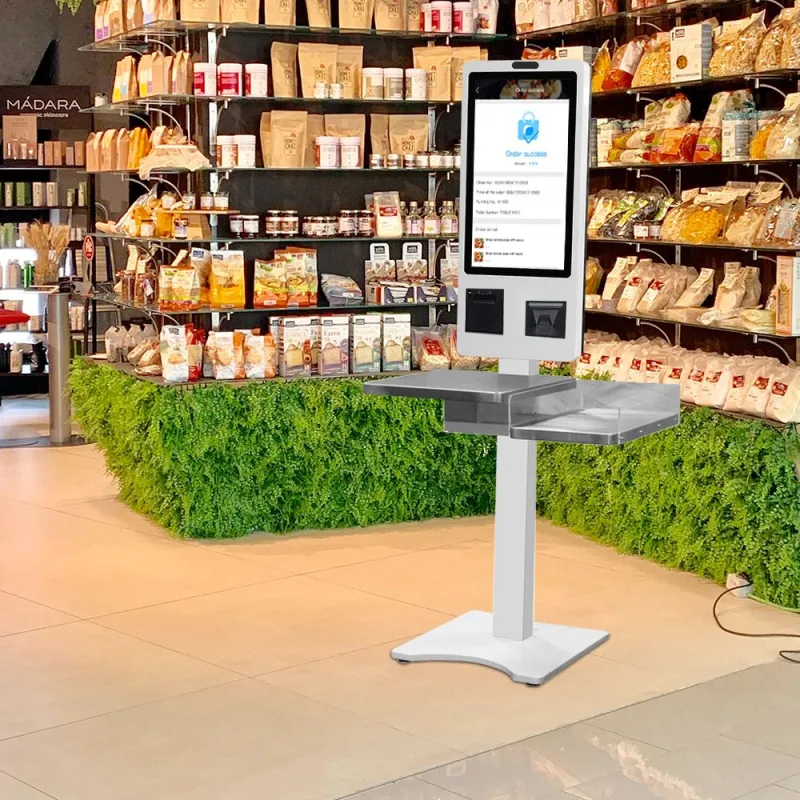
Photo: retail checkout payment terminal surcharge screen consumer shopping, via image.made-in-china.com
Every time you swipe, tap, or click to pay, a financial chain reaction begins—one that often ends with you absorbing costs you never agreed to. Retailers across the United States are increasingly embedding payment processing expenses into the prices consumers see at checkout, and the methods are far more sophisticated than a simple line-item surcharge. Understanding how this works is the first step toward spending more deliberately.
The Invisible Toll Road Between You and Your Purchase
When a merchant accepts a credit or debit card payment, they do not receive the full dollar amount you authorize. A portion—typically between 1.5% and 3.5% for credit cards, depending on the card network and issuer—is collected by the payment processor, the card network, and the issuing bank before the merchant ever sees a cent. These are known as interchange fees, and they represent one of the largest operating costs for retail businesses in America.
For a small business processing $500,000 in annual card transactions at an average fee rate of 2.5%, that amounts to $12,500 per year flowing directly out of their revenue. For larger retailers, the figures scale into the millions. This is not an abstract accounting issue—it is a structural cost that must be recovered somewhere, and that somewhere is increasingly the consumer's wallet.
Three Ways Merchants Pass the Cost to You
Rather than absorbing these fees as a standard cost of doing business, many retailers have developed layered strategies to recoup them. These methods vary in transparency, and some are deliberately designed to escape notice.
Embedded Price Inflation The most common approach is the least visible. Merchants simply factor payment processing costs into their base pricing. The $24.99 item on the shelf already accounts for the 2.2% that the processor will extract at the register. You are, in effect, paying the fee whether you use a card or not—and if you pay with cash, you are subsidizing card users without receiving any benefit in return.
Checkout Surcharges A growing number of retailers—particularly in sectors like restaurants, utilities, and specialty retail—now apply a disclosed surcharge at the point of payment specifically for credit card use. As of 2023, merchants in most U.S. states are legally permitted to add these surcharges, following a series of legal settlements and regulatory changes. The surcharge is typically capped at the merchant's actual processing cost, but consumers often encounter it as a surprise rather than an upfront disclosure.
Convenience Fees on Digital Channels Online checkout has introduced a third layer. Many e-commerce platforms and service providers apply what they call a "convenience fee" for processing digital payments—a charge that is separate from the product price and often non-negotiable. These fees are especially prevalent in government payment portals, event ticketing, and utility bill payment systems. The irony is that digital payments are operationally cheaper for many businesses than cash handling, yet the fee label suggests the opposite.
The Processor Fee Cascade
To understand why this is accelerating, it helps to trace the economic chain from the top.
Card networks periodically revise their interchange rate schedules. When Visa or Mastercard adjusts fees—even marginally—the effect ripples downward through payment processors to merchants, who then face a revised cost structure. Rather than renegotiating contracts or absorbing margin compression, most merchants respond by adjusting pricing or introducing surcharges at the consumer-facing end of the transaction.
The 2022 and 2023 interchange adjustments by major card networks drew significant criticism from retail trade associations, with the National Retail Federation estimating that U.S. merchants collectively pay more than $100 billion annually in card acceptance fees. That figure has only grown as card-present and card-not-present transaction volumes continue to rise in the post-pandemic economy.
For consumers, the practical consequence is a slow but compounding inflation in the effective cost of everyday purchases—one that does not appear in official price indices but is very real in household budgets.
How to Identify When You Are Paying Twice
The challenge for consumers is that fee recovery is rarely labeled as such. However, there are behavioral and informational signals worth monitoring.
- Cash discount programs: If a retailer prominently advertises a discount for cash payment, that is a strong indicator that the standard card price includes embedded processing costs. The "discount" is effectively the fee being stripped out for cash customers.
- Itemized checkout screens: At many point-of-sale terminals, a line reading "processing fee," "service charge," or "credit card surcharge" will appear before final confirmation. Reading this screen carefully—rather than tapping through—can save you from unexpected additions.
- Dual pricing signage: Some gas stations and retailers now display two prices simultaneously: one for cash and one for card. Federal and state truth-in-advertising rules generally require that the card price be the one advertised if only one price is shown, but dual pricing is legal in most jurisdictions.
- Digital checkout fee disclosures: On e-commerce sites, look for fee disclosures near the payment method selection step. Some platforms will waive convenience fees if you choose ACH bank transfer or a specific payment method over a credit card.
What Consumers Can Do
Awareness is the most powerful tool available, but it can be paired with deliberate payment choices.
Using a debit card instead of a credit card will often result in lower processing fees for the merchant, and in some surcharge structures, debit transactions are either exempt or assessed at a lower rate. Paying via ACH transfer—where offered—typically carries the lowest processing cost of any electronic method, and some merchants pass that savings on directly.
For consumers who prefer credit cards for their rewards and protections, the calculus is more nuanced. If a retailer applies a 2% credit card surcharge but your card earns 2% cashback, the net cost may be neutral. However, if the merchant has already embedded fees into the base price and then adds a surcharge, you may be paying twice without any offsetting benefit.
Finally, it is worth asking. Many small business owners will waive a surcharge for a loyal customer or accommodate a cash or debit preference if asked politely. The fee structure is not always rigid at the point of human interaction.
The Larger Picture
The migration of payment processing costs from merchants to consumers is not accidental—it is a rational economic response to a system in which interchange fees are substantial, opaque, and largely non-negotiable for most businesses. Until regulatory reform addresses the underlying fee structure, or until competitive pressure forces greater transparency, the cost of paying will continue to be quietly bundled into the cost of buying.
At ITOnlinePay, we believe that smarter financial decisions start with understanding the full price of a transaction—not just the number on the price tag. The next time checkout feels more expensive than expected, there is a good chance the payment system itself is part of the bill.